Introductory Remarks - Judge Kaye
MEETING OUR RESPONSIBILITIES: SUBSTANCE ABUSE AND LAW SCHOOLS
June 24, 2003
INTRODUCTORY REMARKS BY HON. JUDITH S. KAYE
James Moore, Moderator:     It is my privilege to introduce you to the Chief Judge of the State of New York, Judith S. Kaye. It was Judge Kaye who in 1999 gave voice to growing concern about the problem and the consequences of substance abuse in the legal profession by arranging for what came to be known as the Bellacosa Commission. She directed its members to address the issue of substance abuse and to recommend courses of action. Later during the day you will hear from the chair of that Commission, now a Dean, but then Judge Joseph Bellacosa, as he talks about the Commission's work. Following one of the recommendations of the Bellacosa Commission, in 2001 Chief Judge Kaye arranged for the creation of the New York State Lawyer Assistance Trust, and more about that effort as the morning progresses. For those of you who have not had a privilege of meeting our keynote speaker, you will find the Chief Judge to be engaging, thoughtful and proverbial, both as a speaker and as a writer. She is a graduate of Barnard College and the New York University School of Law; she worked as a journalist for a brief period of time. In 1983, then Governor Mario Cuomo appointed her to the New York Court of Appeals; she made the jump from private practice directly to New York's highest court, where she became an Associate Judge of that court. The Judge had been a commercial litigator here in the City before going on to that court. In 1993 Governor Cuomo appointed her to her current position as Chief Judge of the New York Court of Appeals, and for those of you who don't come from our state, that's our highest court. In addition, the Chief Judge also serves as the President of the Conference of Chief Justices, and she served on Boards of many not for profit agencies and legal foundations. As New York's Chief Judge, Judge Kaye has brought about fundamental changes in the way lawyers and judges serve our communities, ranging from the way in which we serve as jurors, to the establishing of a Client's Bill of Rights, to leading a lengthy and ultimately successful struggle to bring about long overdue increases in fees paid to assigned counsel and, of course, in leading this effort to meet head-on the problem of substance abuse by lawyers and judges. Members of the audience, it is my great privilege to introduce you today to the Chief Judge of the State of New York, Judith S. Kaye.Â
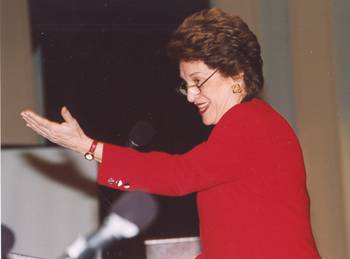
Judge Kaye:   Thank you so much, Jim. You have handed out thanks to so many people in this audience, I would like to begin my remarks by expressing the thanks of all of us to you for your tremendous commitment to the subject at hand, and I want to add my own thanks, Jim, for a really wonderful introduction. I am honored to welcome everyone here.Â
 This
is the first ever in the history of the galaxy, as far as I can tell, conference
to examine the role of law schools in addressing alcohol and substance abuse
in the legal profession. I was wandering through the literature and I noticed
a hero of mine, Ray Lopez, express the thought that many believe that the
law schools are the last bastion -- the last bastion, Ray, you used those
words, didn't you -- in terms of prevention of alcohol and substance abuse
in our profession. That, to me, is thematic about the importance of what
brings us all here together today, and I extend an extra special New York
City welcome to every single one of our visitors here from other jurisdictions.
This
is the first ever in the history of the galaxy, as far as I can tell, conference
to examine the role of law schools in addressing alcohol and substance abuse
in the legal profession. I was wandering through the literature and I noticed
a hero of mine, Ray Lopez, express the thought that many believe that the
law schools are the last bastion -- the last bastion, Ray, you used those
words, didn't you -- in terms of prevention of alcohol and substance abuse
in our profession. That, to me, is thematic about the importance of what
brings us all here together today, and I extend an extra special New York
City welcome to every single one of our visitors here from other jurisdictions.
I know from the beginning that the organizer modestly concedes this conference as just one bringing together a few neighbors to address something that was important to us. The fact that it's attracted registrants from two dozen states, from jurisdictions ranging from the District of Columbia to the State of Washington clearly -- well, I guess you said three dozen law schools, Jim, didn't you. You hit the mark. The last time we spoke it was nearly three dozen law schools, it underscores how vitally significant this subject matter is today, and also demonstrates the concern and the commitment within the legal profession for finding solutions. When Barbara Smith, the Executive Director of our absolutely wonderful New York State Lawyer Assistance Trust, the host of this conference, invited me to say a few things at the beginning, she suggested that I tell you a bit about my own involvement, give you a little of my own history, and so I should tell you, although I think Jim has done a really fine job of giving you my background, more than I would have shared, did you need to know about the journalism? I don't know. Okay, I am proud of that, too.Â
But you know that in 1983 I was appointed to the highest court of the State of New York, and in 1993 I became the Chief Judge, I just celebrated my tenth anniversary as Chief Judge of the State of New York, with oversight responsibility for the entire State Court system. But my involvement, my interest in the subject of substance abuse in the profession began more than two decades ago while I was still a lawyer in private practice. It was my good fortune to be appointed one of the 7 Trustees of the newly formed Client Security Fund, now known as the Lawyers Fund for Client Protection, and it brought me for the first time face to face with a person who has become a life long, cherished friend, Judge, Dean, Professor, whatever you call yourself these days, Joseph Bellacosa, who's sitting in the back of the room. He was at the court at the time, too. The state legislature established the fund to reimburse client losses resulting from lawyer dishonesty in the practice of law. I imagine that many of your states have a similar fund; I see a lot of heads nodding.Â
As a Trustee, I saw many cases and I have to tell you to this day, to this day I still remember names and I still remember faces; because the Trustees shed a lot of tears together as we heard heartbreaking stories of life savings that were lost when a lawyer misappropriated the proceeds of a house closing, or absconded with the settlement funds or insurance proceeds. Clients had such a hard time accepting that their most trusted counselors had betrayed them in that fashion, and far too often, as it turned out, and as we all know so well, it was substance abuse that was the significant factor in the malfeasance.Â
In the past two decades there have been so many changes in the legal profession, more demands, much, much more competition, much, much more stress. And on the other side of the coin, there have also been so many changes, so many developments in our understanding of substance abuse and how we can address it. About 15 years ago, for example, the ABA Commission on Lawyer Assistance Programs was established to support Bar Association programs dedicated to helping lawyers with drug, alcohol and psychiatric problems. The State Bar Association -- and I am so proud to welcome today its brand new President, Tom Levin is there, Tom, welcome -- the State Bar Association has been addressing the issue for well over a decade with its lawyer assistance program spearheaded by, as you know, my hero, Ray Lopez. Over the last several years this association, this esteemed association, the Association of the Bar of the City of New York, in whose headquarters we meet today, also established the lawyer assistance program, and many local Bar Associations throughout the State of New York have also set up programs to lend sustenance, and as I understand it, every state and the District of Columbia have at least one type of lawyer assistance program or committee today.Â
For me, a turning point in the judiciary's role, and I think that's an important contribution here to the dialogue, the role of the judiciary and for me the turning point came in the year 1999. It wasn't triggered by any particular event; it was triggered by an accumulation of events and information. Studies had been reporting that the rate of chemical dependency among lawyers was higher than among the general population, and you've heard the grim statistics from Jim Moore. Unlike the general population, however, lawyers are vested with a unique public trust. How to assist these individuals, how to protect the public against breaches of that trust have been challenging our profession for a long, long time, and what was really shocking for me, was to learn that surveys showed that 40, 50, up to a staggering 70 percent of all disciplinary proceedings involved substance abuse problems. New York's Commission on Judicial Conduct has over the years disciplined judges for incidents stemming from alcohol and substance abuse; the statistics are simply staggering, they are intolerable, they are unacceptable.Â
At the same time, education and early intervention, we know, makes an enormous difference. Education and early intervention can avoid tragedy. As a profession, we owe it to the public, we owe it to one another to develop comprehensive programs that reach those who are at risk and can get them the help that can make all the difference in the world. That is what it means to be part of a profession, isn't it? Of course, I was well aware of the work of the Bar Associations and immensely appreciative of their efforts. They were there not only to help colleagues in need, but also to help assure the highest and the very best in legal services that we provide to the public. Lawyer assistance programs were and they remain an effective and compassionate and professional response to a very daunting problem.Â
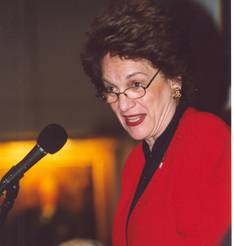
But as head of the third branch of the government, as head of the Unified Court System of the State of New York, I also believed that the court system had an additional responsibility that the court system also owed to the public to be sure that we were doing everything that could be done. So for myself, I progressed from what I call benign inattention and uninvolvement, to a point in September ‘99 that I convened a high level judicial branch commission chaired by my friend and then colleague on the Court of Appeals, Joseph Bellacosa, who as you know will be giving the keynote address this afternoon. The Commission on Alcohol and Substance Abuse in a profession, or as we all know it in the State of New York, the “Bellacosa Commission,” consisted of 19 members, many of them here today, an interdisciplinary group of lawyers and judges and law school Deans and administrators, and the best of all the experts we could find in the field of substance abuse, and boy did they do a terrific job. I see that other commission members are on today's program as well, Dr. W. David Harmon, Director of the Counseling Center at St. John's University, who will be facilitating the panel of students later this morning, and Ray Lopez, founding director of the New York State Bar Association Lawyer Assistance Program who is on the panel called solutions this afternoon.Â
The Commission's mandate was to widen our understanding of the problem of substance abuse and identify existing and potential resources for addressing the problem. In one sense the mandate was broader than the typical lawyer assistance program, because specifically it included judges as well as lawyers, and in another sense it was narrower in focusing on alcohol and substance abuse, while lawyer assistance programs often include mental illness and stress as well. After a year of hard work, including research and meetings and hearings, the Bellacosa Commission issued its report and it observed, not surprisingly, that thousands of people in New York's legal community are suffering from the effects of alcohol or substance dependency, and that's a quote, including, including not only practicing lawyers, but also judges and most relevant to today, also including law students.Â
The commission recommended that we not displace any existing lawyer assistance program committees or voluntary efforts, but that we applaud them, we support them and we enhance them with a statewide program. And in a key recommendation, the commission proposed that we create a lawyer assistance trust, financed by lawyers through a portion of the attorneys by annual registration fees and administered by a blue ribbon panel of Trustees appointed by the judges of the State's highest court.Â
My Court of Appeals colleagues and I greeted the report enthusiastically and we have followed it to the letter. A few months after the report was issued, the proposed Lawyer Assistance Trust became a reality, and the court, showing its eminent good sense and wisdom, appointed as the chair of the board of Trustees, guess who? Jim Moore. Thank you, Jim.Â
In addition to providing leadership and financial assistance to existing and new programs for treatment and prevention of alcohol and substance dependency, the Trust creates special education programs about dependency for judges, lawyers and law students, and recommends changes in court rules where they are appropriate. Not yet even two years old, the Trust already has done impressive work, coordinating and hosting this conference, very prominent among its accomplishments. It's also created a grant program to provide funding to lawyer assistance committees, Bar Associations, foundations, law schools and others, and has already begun making grant awards. It's established a website, I hope all of you have visited, it's published several newsletters, designed an insert that's now part of the biennial registration packet sent to every lawyer who is registered to practice law in the State of New York.Â
When we announced the creation of the Trust, one of the Trustees, Vincent Casolaro, who is clinical director of an outpatient clinic, told a particularly poignant story. He told the story of an attorney who was arrested five times for DWI.  Although he then remained sober for 18 months, when he was arrested the sixth time, he lost his license to practice law. Since then he has been sober for six years. Just imagine if only some of you had been there to help him earlier. It's impossible to know just how much earlier that lawyer might have been helped by education, about substance abuse or intervention by colleagues or family or friends. Ray has said, and I repeat, that many believe law schools to be the last bastion where you can do prevention, and even sometimes there it's intervention. We know from the 1993 report of the Association of American Law Schools that nearly every law school has students who are impaired or at risk of becoming clinically dependent.Â
That brings to my mind a folk tale that many of you have heard me tell before, but it's very significant in my life and guides many of the things that I do as Chief Judge.  Two men were fishing alongside a stream when an infant floated past them. The first jumped in, he rescued the child and handed the child to the second fisherman who placed him safely on the grass. This scenario was repeated time and time and time again until a group of babies came floating downstream. The first fisherman grabbed as many of the babies as he could, but the second turned his back and walked away. "Hey," the first fisherman shouted, "aren't you going to help me save these babies?" The second replied, "You save them, I'm going upstream to see who's throwing them into the river." And that's why, that's why I am so pleased, so delighted that this conference is going upstream to explore the stage where problems start. We know this is where they start for many lawyers, and where education about the problem may have its best effect. The last bastion before they enter the legal profession.Â
I would like to conclude my remarks this morning back where I began, and that is with a thank you. I want to thank the New York Lawyer Assistance Trust, its Board of Trustees, its staff, the conference committee, the cosponsors of this conference, the ABA commission, the 20 Bar Associations, the nine lawyer assistance programs throughout our region, and above all, to thank all of you for helping us address this very vexing problem. Thanks so much, have a great conference.Â
*******
Biographical Information
Judith S. Kaye
Chief Judge of the State of New York
B.A., Barnard College; LL.B., New York University School of Law, cum laude
Judge Kaye was sworn in as Chief Judge of the State of New York on March 23, 1993, becoming the first woman to occupy the top judicial office of New York State. She became the first woman to serve on New York State’s highest Court when Governor Mario M. Cuomo appointed her Associate Judge of the Court of Appeals in September 1983. Chief Judge Kaye is Chair of the Permanent Judicial Commission on Justice for Children; a member of the Board of Editors of the New York State Bar Journal; Founding Member and Honorary Chair of Judges and Lawyers Breast Cancer Alert (JALBCA); and Chair of the Board of Directors, National Center for State Courts and President of the Conference of Chief Justices (2002-03). She also serves as Trustee of the William Nelson Cromwell Foundation.
Judge Kaye is the author of numerous publications, particularly articles dealing with legal process, state constitutional law, women in law, professional ethics and problem solving courts. She is the recipient of various awards, including the American Bar Association Commission on Women in the Profession’s Margaret Brent Women Lawyers of Achievement Award, the National Center for State Courts’ William H. Rehnquist Award for Judicial Excellence, New York University Law School’s Vanderbilt Medal, the Barnard College President’s Medal, the Gold Medal of the New York State Bar Association and the Fordham-Stein Prize. She has also received numerous honorary degrees. She engaged in private practice in New York City until her appointment to the Court of Appeals.