Panel: Student Stories
MEETING OUR RESPONSIBILITIES: SUBSTANCE ABUSE AND LAW SCHOOLS
June 24, 2003
STUDENT STORIES PANEL
James Moore, Moderator: I would like to introduce you to the moderator of the next panel, his name is W. David Harmon. Dr. Harmon is the director of the counseling center at St. John's University, he's also a member of the Board of the Lawyer Assistance Trust; and I now introduce you to our good friend, David Harmon.
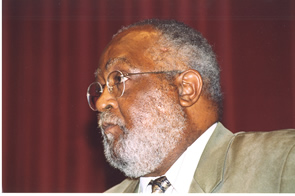 David
Harmon: Thank you. Each year I have the opportunity and
the duty and the pleasure to address the incoming class of students at
the St. John's University Law School, and this I do during their orientation,
I believe it was mentioned earlier on that during orientation students
get overwhelmed with so much information. I try not to overwhelm them,
I try to use whatever personal charm I have to make them feel at home and
make them feel at ease. My talk to those students is generally about the
services that are provided to the university community by the counseling
center, and the law school being a part of the university community is,
of course, entitled to use our services.
David
Harmon: Thank you. Each year I have the opportunity and
the duty and the pleasure to address the incoming class of students at
the St. John's University Law School, and this I do during their orientation,
I believe it was mentioned earlier on that during orientation students
get overwhelmed with so much information. I try not to overwhelm them,
I try to use whatever personal charm I have to make them feel at home and
make them feel at ease. My talk to those students is generally about the
services that are provided to the university community by the counseling
center, and the law school being a part of the university community is,
of course, entitled to use our services.
Part of my presentation deals with the efforts and methods that we use in reducing stress. I have a hypothetical tale I generally tell them during this talk and it goes something like this. During the first year of law school you will be challenged in many ways. Your instructors, your family, your friends all will make demands on you for your time and for your energy. There are a good many things, which can sort of push you over the edge. For example, not enough time. There is never enough time. Not enough money, not enough companionship, not enough energy, and things of that sort. You may be having trouble at, say, understanding a particularly obtuse concept in class. This is really kind of funny, because you scored really well on the LSAT and when you were an undergraduate there was nothing you didn't understand. But now you are in law school. When you finally get to understand it, you might think it's a good thing to sort of reward yourself, so you wait until Friday and you go out with your friends and you have a few because you deserve it. When more difficult kinds of concepts appear, you finally or you find yourself looking forward to Friday so you can unwind. On a Wednesday, about halfway through the semester your significant other finds they can't wait until you finish your studies before getting married. They say to you it's over, you are on your own now. Then you don't wait until Friday. So the reason for drinking or drugging can now be that it's daytime or nighttime or Wednesday or that your landlord has the nerve to demand last month's rent; he doesn't even know you are studying to become a lawyer. I tell the students that stress and overwhelming responsibilities can be handled in creative and therapeutic ways and not necessarily by medicating it with alcohol or drugs. I hope that they listen. Today we have the pleasure of being able to listen to two individuals. They are both competent and respected members of the profession. I am sure that their stories will be enlightening and we will have a little time for questions at the end of their presentation. First we will hear from Richard Reid, Touro Law School, a lawyer in the Legal Aid Society of Suffolk County, New York. He's a supervising attorney in the Suffolk County drug court and has been in recovery since 1990.
Richard Reid: My name is Richard, and I am an alcoholic. When I was asked if I would speak here, I said yes right away, but then I started to think that maybe I am not supposed to be here because I was in recovery before I went to law school, but then I was told that it would be all right, just tell your story; and if you have any ideas or solutions or whatever, tell them that, too. So here goes.
I guess you could say I came from the stereotypical alcoholic family, both my parents were alcoholics and through what I now know is learned behavior; I emulated their response to difficulties. My solution to any kind of problem or difficulty was to get hammered. In 1980 I discovered this drug called cocaine that then allowed me to stay up all night long and continue to get hammered. You might say I exercised my option to run from responsibility on a daily basis. But then came a time where a sense of hopelessness and despair and the pain that came with that was just so much that I entered a phase, what I now know to be called suicide ideation, and it wasn't until that point in time that I realized, I finally realized I had a problem. Because my entire life I literally put down people who had attempted suicide or had actually gone through it as being weak, can't handle things, responsibility, meanwhile hearing how I am having those same types of thoughts.
In 1989, due to a strong suggestion of my probation officer, I went into rehab for the first time, because the alternative was going back to jail. A year later, fortunately for me, I was able to go back to that same rehab, this time on my own, not mandatory, and that was in 1990, 13 years ago this month. I haven't had a drink or a drug since. Fortunately for me I think, you know, God gave me some brains, God and my parents, and I was lucky enough to say I would go back to school. I went to college, graduated in '95, then in '96 I entered law school. At that point I had approximately 6 years of recovery.
I have to say that up to the point I got into recovery, every job I've ever had invariably I gravitated towards the drinkers. Without even thinking about this, you just know who goes out after work, Miller time, et cetera, et cetera. Every job. It was no different in law school. Within the first month or two, there was a group that had gotten together and every Thursday night they went to a local bar on a weekly basis. At first I went with them, and then after a month or so I said to myself what are you doing this for? You just drink coke all night, and you are up all night because of the caffeine, going to the bathroom, so I just said the hell with it, I stopped going, I went at Christmas vacation, or at the end of the year, but I just stopped going, I just didn't belong there.
This brings me to another point in what I was trying to say today, that I guess you could say I had like kind of a unique position to observe what was going on around me, because I had been in rehab twice, I learned, I had been educated about the disease of alcoholism and about the attitudes, about denial, about progression, all of which I had, and I had some time to reflect on my own life and my own progression in alcohol, my own denial, my own denial brought me to what I call canning for nickels -- you see these people with big large plastic bags full of empty soda cans, that's called canning for nickels. Or strolling around my neighborhood looking for decent cigarette butts to smoke because I didn't have the money to buy them, this is where my denial brought me, and finally suicide ideation.
Now, I know about denial, I know about progression, and I know about attitude, and I would sit with this group that had gravitated towards each other and I would listen to them and I would hear myself in certain people. One of my colleagues in school, his response to a difficult situation was I would just go out and get hammered. A female colleague, to say she was in a bad mood on a daily basis is putting it mildly, and if you looked at her wrong she would rip your face off verbally. It was just things I had done myself and then there was another student that Dean Rosenblum asked me to speak to, it was thought that he may have a cocaine problem, and Touro has a small dorm over near the school. I went over there twice and I left him notes, and one day he came to me just to tell me “look, I don't have a problem” I don't know whatever happened to him, but I do know, as far as I know he never returned the next semester, and I still don't know what happened to him. These are just observations I was able to make from a personal point of view.
Yes, it is problem. I went to law school during the evening division when most of the students were, like me, a little older, and patterns have been set, progressions are in the works, whether slowly or faster, or depending on the individual, but I could tell, I could see myself. Then I was given the opportunity to meet Ray Lopez (New York State Bar Association Lawyer Assistance Program Director) and to have Ray come to the school to do his presentations. Dean Rosenblum suggested that if I tried to do it in and of itself nobody would show up, so how about we do it during the professional responsibility classes? And it worked, we had a captive audience. I was able to sit through these presentations and make another observation. Some of the students continued doing homework or reading or whatever. I said well, all right, that's all right, because maybe this really has no impact on them, because they just don't have a problem with alcohol or drugs. Other students always sitting in the back of the room, you could hear them making little jokes and giggling, and I am telling myself that's you before you got in recovery. Sitting in the back, making the jokes, anything but hearing the truth or making you think that maybe you have a problem.
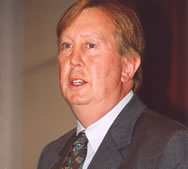 Now
these two observations in time over the four years I was there gave me an
idea, and my idea was to have something, some kind of presentation during
orientation. Now, I think this should be done during orientation I think
it should be done when the students don't know each other and have not had
the time to gravitate towards each other, the ones that will drink and will
do drugs. They don't know anybody, that's why I think it should be done
during orientation, and my idea was to have Ray (Lopez) come down, or Eileen
Travis (New York City’s Lawyer Assistance Program Director), and do one of
their presentations. Then after the presentation, break the students up
into small groups of ten, and I would have volunteers from the Suffolk County
Committee on Alcohol and Drug Abuse come in and speak to these small groups,
tell them a little bit about their story.
Now
these two observations in time over the four years I was there gave me an
idea, and my idea was to have something, some kind of presentation during
orientation. Now, I think this should be done during orientation I think
it should be done when the students don't know each other and have not had
the time to gravitate towards each other, the ones that will drink and will
do drugs. They don't know anybody, that's why I think it should be done
during orientation, and my idea was to have Ray (Lopez) come down, or Eileen
Travis (New York City’s Lawyer Assistance Program Director), and do one of
their presentations. Then after the presentation, break the students up
into small groups of ten, and I would have volunteers from the Suffolk County
Committee on Alcohol and Drug Abuse come in and speak to these small groups,
tell them a little bit about their story.
And then my idea continued. Anybody who's seen an AA meeting list or this brochure that Eileen puts out, there are questions on here at an AA meeting list: “if you answer yes to 3 or more, you have a problem.” I answered “yes” to nine of them, and “maybe” to the tenth. That was three years before I actually got into recovery, all right? Denial. But I would like these volunteers to very slowly read each question to the small group of students and say “I don't want you to answer in any way, shape or form, I just want to you listen to the question and think about it.”
One of the questions on the AA meeting list, this brochure, others I have seen, “have you ever had a loss of memory when apparently functioning because of my drinking or drug use?” Now, I can't tell you how many times I have been at a meeting and I have heard the speaker or somebody in the audience share they had no idea what a blackout was until they came into AA, or they read the list. They had no idea, and I am thinking I am going to school with people who are 35, 40, 45, who might be sitting there up to this point in orientation, having no idea that they are having blackouts. Or even the day division, the younger kids, the 25-, 26-, 27-year olds, I have heard people at meetings say they started having blackouts right away when they first started getting involved in alcohol or drugs. These kids can be sitting there having no idea they are having blackouts, but if somebody reads this question to them, and asks them to think about it, I plant a seed or somebody plants a seed in one of these individuals, that's all I could really try to do, is plant a seed.
My idea -- I take a it a step further, I know there are these questionnaires out there that rehabs give to people. They are designed so even though people lie you could tell that they have a problem. The idea was to after you have read the questions to the students, to inform them there is a questionnaire there, if you would like pick it up, fill it out and by the use of a pin number it will be evaluated and it will be gotten back to you somehow, completely anonymously, also we would stress the fact of confidentiality and things like that. But it was just an idea I had based on my own personal experience. If I can try to plant a seed or help somebody else try to plant a seed, that's pretty much the best I can do. But it is a possibility. You can have a page, you can have a chapter in the student handbook, but the people with the problem are not going to read that, however you are confronted with these questions and you ask them to read it, or think about it. Who knows what will happen? Thank you for letting me share.
David Harmon: Our second presenter today is from my old stomping grounds; she's from the area I am from in Buffalo. She's a graduate of Buffalo Law School. Laurie L. Menzies, she won the university scholarship for academic excellence and public interest scholarship; her practice is in estate planning and elder law and she is a member of the New York State Committee on Lawyer Addiction, Alcoholism and Substance Abuse, the Erie County Lawyers Assistance Program. I present to you Laurie Menzies.
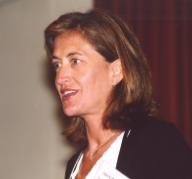 Laurie
Menzies: Hello everyone. My name is Laurie, and I am an alcoholic. I
can't believe the way life has worked out. I absolutely can't believe
I am an attorney, successful one, passed the Bar, made it through law school
and that I am an alcoholic, and it's on my resume. I absolutely know that
I have a lot of blessings in my life and I have been touched by a power
that exists in all of us, and I use it daily and I try to be a blessing
to my elderly clients, and I love what I do, and I can't believe that I
have been blessed to actually be in recovery from such a horrible disease.
Laurie
Menzies: Hello everyone. My name is Laurie, and I am an alcoholic. I
can't believe the way life has worked out. I absolutely can't believe
I am an attorney, successful one, passed the Bar, made it through law school
and that I am an alcoholic, and it's on my resume. I absolutely know that
I have a lot of blessings in my life and I have been touched by a power
that exists in all of us, and I use it daily and I try to be a blessing
to my elderly clients, and I love what I do, and I can't believe that I
have been blessed to actually be in recovery from such a horrible disease.
Alcoholism as you have heard is really -- it's deadly, it's progressive, and a lot of people don't make it, and the way I was headed by the time I hit law school, I was very seriously ill. I didn't drink until I went to Vassar. This is so funny, actually I need to say something before I forget, Richie reminded me about blackouts, and I didn't know what they were, although my entire career at Vassar was messed up socially because I couldn't remember what I had done the night before, and I just thought, “I don't know, I didn't understand how I became such a social nightmare to myself.” And it all had to do with alcohol and drinking. Such a lack of education about what alcohol did actually with my body.
I am an alcoholic, and I process alcohol differently. But speaking of blackouts, the story is that I was at Founders Day where alcoholics gather every year in Akron, Ohio, once I got into recovery and I was talking with Dave Pfalzgraf who is a member of the Erie County Lawyers Assistance Program, and he said “don't you remember,” (he was talking about law school), and he said “don't you remember that we came to speak to you at University of Buffalo?” And I said no. He said, “yeah, you came up to us after our presentation and you said thank you for coming to speak to us, because I used to have a problem with alcohol.” And he said “your breath just blew us off the stage.” I was in a blackout, I do not remember for the life of me.
Different parts of my story come back to me as time goes by. I am so grateful, my 30s are great. I can't wait for my 40s. My 20s were horrible, and it has to do with the fact that by the time I took the LSAT exam I had been working in Boston for several years, I was a Vassar graduate and I was a Trustee at a bank, and life was wild. I got the highest grades on the classes they sent me to for a trust degree up at Williams College, where I was at the Purple Pub every night with everybody from the bank. All I did was drink that whole week, but I was a really good test taker, so I had a couple of beers on my way to the LSAT, and I got 98th percentile, so how can I have a problem?
Washington and Lee University was the best one that I got, the best school that I got into. I wanted to go there. I never had paid attention to my undergraduate grades because I was sure Vassar was just going to take me places, and I wasn't having to have to worry about that I had a 3.0 from there. But Washington and Lee was great, got down there, and the scary thing was -- when I got dropped off, I had become a daily drinker during the time after college, after late college, kind of led into that, but it was every night I got home and thought I deserved a drink. Every once in a while in the back of my mind I thought does everybody need to have a safety valve of vodka in their house just to make sure they feel comfortable that you have something every night to rely on?
But who was I going to talk to about that? So when I got down there I was a little worried that my daily drinking was going to be a little bit of a problem, because I needed to study pretty hard. Work wasn't so hard; this was going to be tough, the thing that I found was all the students were work hard, play hard attitude. I was a couple of years older, I was 26, but they were right out of college and drinking this Jaeger Meister, this dark brown stuff they had in Virginia that I don't know what it was. But it was really bad, and the problem was that I had to drink during the day so I didn't shake by then, so I didn't need any more at night. And I basically wanted everyone to leave me alone, because my alcoholism was physically taking me over, and I couldn't handle what was going on. The weekend? Didn't matter to me whether it was the weekend or not, I needed alcohol; so I wouldn't shake before I would go to class, so I would just have a little wine. The problem was, the rigors of this law school had 100 new students every year, that was it, so everyone knew everybody. And by one Saturday, everyone was at the same parties at W and L, there were only 100 of us in each class, and everybody knew everybody, so there was one farm to go to party, or out to the river, and it was a lot of drinking. The one day I was drinking at home before I went to the party and I couldn't find my way there, I got lost, and where did I get lost? In front of VMI, where there were policemen and breathalyzers, and so I got my first and only DWI in Virginia. And here I am at law school, and I remember being really upset because I was stuck in jail, and every other person at that law school was at that party except for me, and they were all drinking and couldn't come pick me up, and I was the only one that got arrested.
I finally got out of there and I went home and I popped a bottle of champagne because I got out of jail. That story went around school, and I remember feeling funny that people were thinking that I drank too much, and I thought who are they? I mean everybody was drinking a lot, and there was another student that was in a serious car accident, alcohol related, but she wasn't arrested because they got her home in time. And I was pretty mad that I was going to have to face going to alcohol classes as a result of the legal work that was being done for me when I came back, but I never made it back. I went home for Christmas break, you can see my trache scars, and I have chest tube scars here, but I caught a form of pneumonia because my body was so worn down that I had a double respiratory distress syndrome which can -- which is a lot like this SARS thing. I went to Toronto. I had a 2 percent chance of survival, and I had weighed 220 pounds because all my organs had shut down, but the doctors didn't know how much alcohol was actually in my system all the time. I think the reason I blew a .35 at my DWI in Virginia was because I had a base of about .2 going on all the time. If I dipped below that I would actually start shaking.
And no one had addressed any of this, and I looked fine until I am in the hospital, and all my hair fell out and everything else, and I missed my second semester at Washington and Lee. Hadn't done so well anyway, so I didn't really want to go back there, and I didn't know what I was going to do with my life, so I took off for Australia for a year. When I came back I went to University of Buffalo. Moved back in with my lucky parents and decided to try it again at UB. There I guess I was addressed, but I was basically in blackouts half the time, I was passing out in my car, making it to classes sometimes, sometimes not, I would make it through the first semester, even got an honors in contracts, I did two first semesters of law school, and Washington and Lee (credits) wouldn't transfer, UB wouldn't take the grades, except for a full year, so I just started over.
After my -- in the second semester it was just so bad, I was having trouble regulating my drinking, I couldn't tell where my tolerance was anymore, and I basically needed to function but couldn't function, and I passed out in one of my exams, and I had a half hour left; what a nightmare. When I woke up I just said I am not going to be able to do this, I can't, I am never going to be a lawyer, I am never going to be. I really was killing myself and I couldn't stop. So that summer I don't really remember, and the next thing I know I was in rehab, thanks to AA. I couldn't stay sober at AA either, so they told me I needed more help and I went to rehab. From there I called the Dean and told her that I wanted to come back and what did I need to do. And she let me take the exams that I had missed by studying by myself that fall, using the notes that I had, most of them were pen-lines down the page, but I read what I needed to read and I caught up so I graduated a semester late, and my self-esteem was pretty low.
Ego deflation is part of recovery in AA, though, it doesn't really suit me, didn't suit me in law school, everyone else was pretty full of themselves and I was really, really scared, but it really didn't do me a disservice. Actually, I ended up winning lots of awards and my clients really, really love me. I am a grateful attorney, I know from where I've come, and I just look forward to my future.
I cannot believe there is a whole room full of people actually caring and addressing what I have gone through, and I don't know what the answer is, because I know when you confronted me I didn't want to stop, because I didn't know that I could, and a lot of people can't. I know I am blessed. I know a lot of people die, but if we don't address it, then what good is that? So I don't know the answers, and I know that people are rough, I mean we do not want to get help and it's a tough job that we put in front of you, but once you help us, we can become tremendously productive and helpful and useful members of society. I promise. So that's all I have to say.
David Harmon: Your questions?
Ken Rosenblum: Ken Rosenblum for Laurie. I know you have said you don't have any of the answers, but give me some impressions. Is there anything that your law school could have done -- could have put in front of you, either at orientation or in another place -- that could have helped you more?
Laurie Menzies: I think Washington and Lee really pushed a lot of alcohol, too. I mean there was a keg outside of the law school every Tuesday and every Friday. And at every -- we had a lot of powder puff football games, there was seriously a lot of activities besides law school, and the school was tough. You were supposed to perform in the fun part and the school part, and so there was a lot of social pressure to stay up with this. The one day that I would be trying to stay home and get studying done, they would be out there blaring the car, come on, and people liked me because I -- well, I was a lot of fun when I was drinking, but I also -- I drank like them and made them feel comfortable, so I don't know what it was, but they did not recognize that I was very, very, very sick and headed for the hospital within a month.
Audience Member: This question is for Laurie as well. Assuming there had been an intervention at either Buffalo or at Washington and Lee, can you hypothesize for us what that intervention group would have looked like that might have helped you shift your behavior?
Laurie Menzies: It's very hard, I think by the time you are in law school, because you are really isolated, I didn't have a lot of people I was close to because I didn't want anyone to really know, so it may have been a professor; a couple of professors, perhaps. I don't know that the other law students would have wanted to get involved, and if they could have actually, if you find out what the person's social background is, I was living with my mom and dad who were tremendously loyal and could have been in on it, that would have been part of the group, and maybe some of these guys from the Lawyers Assistance Program. I know that I would go to law school and help anyone that needed help now, because I've been there and I sort of -- I know that as a recovering alcoholic I don't want to listen to someone who hasn't been through this, I did not want to hear it from somebody who hadn't done it. So if I am there and there is a law student and they see me and they know my story, then they might come along. So we have a job to do once we are on these committees to go back to the school.
Audience Member: I have one more question, at least one more question to both Richie and Laurie. When you describe your experiences with the attorney admissions process, was there anything, any unusual experiences in the process, any difficulties that they asked, anything law schools could have done more to help you through the admission process?
Richard Reid: Well, for me the fact that I had some -- a criminal past did raise a concern from the very beginning. I was just told that you have to give full disclosure from the get-go, and that's what I did. I was fortunate that by the time the questionnaire for admission had to be filled out, I had become familiar with the Suffolk County Committee Drug and Alcohol people, like Gene O'Brien, Eddie Estevez, they knew of my attempts to bring Ray into Touro, and Gene asked me one question, he said were all these things alcohol related? And the answer to that was yes. I tell my clients all the time, you know, I never got arrested sober, and they look at me. Sometimes the light goes on, sometimes it does not, but the fact is I never got arrested sober. So I had my interview and I filled out my application, and I had full disclosure, I even had to go try to get a certificate of disposition from St. Bonaventure from 1969 and when I told the clerk up there what I was looking for, she started to laugh, she said we don't keep records that long. But I put all this down on my questionnaire and presented it to them, and I also got my certificate of relief from disabilities, sailed right through that, only because of being forward and doing all these positive things in my life, and to a degree self rehabilitating myself by going to meetings after I left rehab the second time. So I kind of sailed right through the process. My biggest problem was the Bar exam. But the actual process for me, and the amount of time in recovery between the day I actually went into recovery and the day I filled out the questionnaire was so long that -- and from colleagues who helped me, who counseled me, I really had no problem with it.
Laurie Menzies: I am looking forward to the presentation this afternoon on how to resolve those types of questions, because I didn't have much guidance, I think I sort of tripped through it, and I do know that Dave and Chuck in Erie County talked to me a lot and to our committee a lot about the ways that's being addressed and the fact that we can, as committee members, help with law students to answer the questions and get them into recovery while they are in law school. Because I think the fact that I was in recovery and could actually relate these things to what was going on in my life at the time is all that they asked. I think that there is something going on about being able to check whether you are going to pass this committee on fitness before you go through the rigors of the Bar exam, or all the way through law school, because that could be one big concern. I just went on faith and actually passed the Bar, and then when the committee on fitness came, I just explained that the things that were going on were a result of my alcoholism, and I was in recovery and then they accepted me.
Audience Member: I just attended law week, the Connecticut Bar Association annual meeting where the cash bar opened at 11:30 a.m. in Connecticut. But I attended -- I notice one of your cosponsors is a Lawyers Concern for Lawyers Committee, I am from a law school and a fellow that reminded me very much of your speech came up to me, self identified, and he was in Alcoholics Anonymous, he was in recovery, has for years and years, a successful lawyer and offered to come and speak to our students about his journey. Then we both sort of agreed if I brought him we would have an empty lecture hall because the students wouldn't come in, necessarily, and attend a lecture given by somebody on that topic. I guess this is a follow-up to your initial question of how do I get students in front of someone like this? You're volunteering to go back to your law school, how are you intending to get that message to the people who probably won't attend a lecture on this topic?
Laurie Menzies: They do come, and it's part of their ethics class.
Richard Reid: Unless it's a captive audience.
Laurie Menzies: I think they have to as part of their ethics requirement attend class, and some of them don't, actually, the class, I don't know if it's as full as the first day of class, but we have a really big audience and they seem to --
Audience Member: That's not part of our curriculum of professional responsibilities; this would be an add on event. I was wondering about even a private counseling, how people would have to self identify it for someone like me, a Dean of Students, and then how you would manage that outside of a captive audience in class? Have you ever had any experience doing something like that?
Laurie Menzies: I don't quite follow.
Audience Member: Helping students on a one on one basis? Richard, have you?
Richard Reid: The only thing I can say, one incident I spoke about that I was informed about a student and I tried speak to him and he subsequently told me he didn't have a problem. I was always available.
Laurie Menzies: Actually, I misspeak, we do work in Erie County with law students, if they are identified and if they want to meet for lunch, and then I bring them to meetings. I do have a woman who's actually taking a break from law school now in Florida down in rehab, every case is a individual, but once you have people in a community who are willing to go and especially it can be women as well as men, to be able to meet whoever it is and work on an individual basis.
Ken Rosenblum: If I could do a little advertisement for a program at 2:30, session at 2:30 I am going to talk a little bit about identifying and designating a student on an affirmative basis, and that's a way to sometimes get people's attention. So the 2:30 program I will give you some of the details about it, something we have done in identifying and training a law student to make the referrals directly to the law student rather than through counselors, through admissions.
Audience Member: Being involved with the Association of the Bar and the New York State Bar with Ray Lopez and all the efforts we made over the years to go to law schools, one of the things we have learned is that if it is voluntary people will not come. Having stood in front of many empty classrooms before. However, when it is integrated as a part of professional responsibility and there is a culture within the law school itself and we have been to a number of them, New York Law School, Touro, Benjamin Cardozo where it's become a culture of the law school to understand that you are both a lawyer and a human being and they integrate it into part of the curriculum, whether professional responsibility -- for one of the courses it was a first year course -- where it was myself, somebody from the discipline committee and Eileen Travis and we spoke to them not only about recovery, but about all sorts of problems that will come up in law school, and when it's presented in that way, and there is that culture within the law school, I think students are much more willing to go for help. We had people come up to us after the presentation telling us they were running out of medication, they were manic depressives, they had an alcohol problem, what could they do about this, and we were able to provide them with that confidential assistance. So, when you do present it in that manner, and instill in the school itself you are a human being you are there to help them as well as to become Masters of the Universe, I think it works very well.
David Harmon: I would like to take this opportunity to sincerely thank Richard and Laurie for their presentations and to thank you for your kind attention.
Biographical Information
W. David Harmon
Director of the Counseling Center at St. John's University, Jamaica, NY; Adjunct Associate Professor of Psychology, St. John's University and State University of New York, College at Old Westbury
B.S., SUNY at Buffalo; M.S., Hofstra University; Ph.D., St. John’s University
As Director of the Counseling Center, Dr. Harmon oversees operations management and budget; as Associate Director he supervised and conducted group and individual counseling, supervised staff and graduate assistants. Dr. Harmon is an administrator, teacher, therapist, occupational development specialist, and a lecturer with expertise in counseling, relaxation training, pain control, multicultural awareness and human rights issues. He has served as a consultant to school districts, New York State agencies, and the New York City Police Department, and he has given presentations to numerous community, business, and professional groups; conducted seminars for academic groups on such topics as: Counseling Methods and Models, Stress Management, Pain Control, Careers in the Health Professions, Test Construction and Test-taking Techniques, issues of Multiculturalism, and Academic-Business Partnerships for Quality Education. Dr. Harmon is a recipient of numerous awards, including the President’s Medal and the Outstanding Achievement Medal for Administration from St. John’s University. He serves as a Trustee of the New York State Lawyer Assistance Trust.
Richard C. Reid
B.A., magna cum laude, Dowling College; J.D., Touro Law Center
Richard Reid currently supervises a team of four lawyers in the Suffolk County Drug Court. He previously worked for the Legal Aid Society of Suffolk County. Reid is the co-chair of the Suffolk County Bar Association’s Committee on Lawyer Alcoholism and Drug Abuse.
Laurie Menzies
B.A., Vassar College; J.D., University at Buffalo of Law School
Laurie Menzies is in private practice in Buffalo, New York, specializing in estate planning and elder law. At the University of Buffalo Law School, Menzies received both a University Scholarship for Academic Achievement and a Public Interest Scholarship for her work at Legal Services for the Elderly and Disabled, where she concentrated in Medicare and Medicaid advocacy and in long-term and home health care matters. The receipt of the William J. Regan Award honored Menzies as the U.B. Law School Graduate demonstrating the greatest proficiency in estates and surrogate’s law motivated by a strong concern for the public interest and public welfare. In May of 1998, the Business and Professional Woman’s Clubs named her the New York State New Careerist of the Year. She is currently a member of the Trusts and Estates Section of the New York State Bar Association and the Elder Law and Surrogate’s Court Committees of the Erie County Bar Association. She also belongs to the National Academy of Elder Law Attorneys.