Panel: Overcoming Obstacles
MEETING OUR RESPONSIBILITIES: SUBSTANCE ABUSE AND LAW SCHOOLS
June 24, 2003
PANEL: OVERCOMING OBSTACLES TO IMPLEMENTING DRUG & ALCOHOL POLICIES AT LAW SCHOOLS AND ENCOURAGING LAWYER ASSISTANCE SERVICES
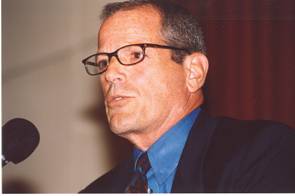 Michael
Cohen: Good morning, everyone, my name is Michael Cohen. First of
all, to start I wanted to second or third or fourth what's already been
said here a number of times, and that's to thank the committee for putting
this together. In Florida I am the Executive Director of the Florida Lawyers
Assistance Program, and I know in my program the two groups that we think
are probably the most important as far as prevention education are law
students and the bench. Those are the two areas that we concentrate on
as far as reaching the lawyers in our state, so I think putting together
this conference is tremendously important, and I think the turnout and
the showing and the number, not only the number, but the quality of people
that are here indicate that, that is becoming more accepted throughout
the country. I want to thank Barbara and Jim Moore and the committee for
putting this together, and Eileen for getting us this fabulous meeting
space. I don't think the State of Florida is quite as old as this building,
so I am very impressed. With me on the panel today, just so you understand,
the format we are going to try and keep this to about 40 to 45 minutes,
because I think that the information and resources that you all represent
as indicated by the questions that have already been asked are certainly
as important and as impressive as any of the three of us up here now, so
we would like to leave about 15 or 20 minutes for questions and comments
at the end. On the panel with me today are Martha Treese, who is the chair
of the character and fitness committee for the Board of Bar Examiners for
New Jersey, and Robert Muldoon, who sits as a member of the Board
of Bar Examiners for the Commonwealth of Massachusetts, and I think, Rob,
were you on in 1980 when I was admitted in Massachusetts?
Michael
Cohen: Good morning, everyone, my name is Michael Cohen. First of
all, to start I wanted to second or third or fourth what's already been
said here a number of times, and that's to thank the committee for putting
this together. In Florida I am the Executive Director of the Florida Lawyers
Assistance Program, and I know in my program the two groups that we think
are probably the most important as far as prevention education are law
students and the bench. Those are the two areas that we concentrate on
as far as reaching the lawyers in our state, so I think putting together
this conference is tremendously important, and I think the turnout and
the showing and the number, not only the number, but the quality of people
that are here indicate that, that is becoming more accepted throughout
the country. I want to thank Barbara and Jim Moore and the committee for
putting this together, and Eileen for getting us this fabulous meeting
space. I don't think the State of Florida is quite as old as this building,
so I am very impressed. With me on the panel today, just so you understand,
the format we are going to try and keep this to about 40 to 45 minutes,
because I think that the information and resources that you all represent
as indicated by the questions that have already been asked are certainly
as important and as impressive as any of the three of us up here now, so
we would like to leave about 15 or 20 minutes for questions and comments
at the end. On the panel with me today are Martha Treese, who is the chair
of the character and fitness committee for the Board of Bar Examiners for
New Jersey, and Robert Muldoon, who sits as a member of the Board
of Bar Examiners for the Commonwealth of Massachusetts, and I think, Rob,
were you on in 1980 when I was admitted in Massachusetts?
Robert Muldoon: Even longer.
Michael Cohen: Even longer, which is probably the best res ipsa loquitor that the Massachusetts process is not stringent enough. We would like to talk a little bit about the process in each of our states, because we really run the gamut here, among the three of us -- I think it was more by chance than by design -- but I think we represent both ends of the spectrum and somewhere in the middle and you see who falls into those places.
I would direct your attention to Tab 3 (of the handouts) which somebody has already mentioned is the hand out for this presentation, which compares the admissions requirements, judicial admission, as well as giving the questions on some of the Bar applications around the country, and I think you will see how widely those vary. I think that's something that we would like to talk about in this presentation. So, representing the northeast liberal side of the spectrum we are going to start with Bob Muldoon from Massachusetts.
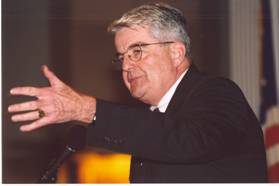
Robert Muldoon: Thanks very much, Michael. I can't tell you how pleasant it is for me to stand up in front of a large group of intelligent, serious and intent people who are not sitting for the Bar exam. Five weeks from now, however, the last Wednesday and Thursday of July, I will be standing at another podium at Boston's World Trade Center looking out at four acres of Bar applicants, about 2,500. One of my colleagues will be out in Springfield where probably about another 500 or so in more bucolic surroundings than Boston World Trade Center will be taking the same exam, and I look out at that group in Boston where I will be running the show, at this group of 2,500 and out of that group we have most of them probably about two-thirds are from one or other of the 9 Massachusetts law schools. As you may know, not only per capita are we over law-schooled, we are over-lawyered. I think we are approaching 60,000 admitted lawyers in not one of the largest states in the union. We have these folks who come and take the Bar exam from all over the country. A third of them comprise probably about another 40, at least another 40 or 50 law schools, we have people who split the exams taking one day in Massachusetts and another day in Jersey or New York, Pennsylvania, or D.C. and they do that. So we have folks who are taking the Mass Bar, many of whom are taking multiple bars, many of whom have no intention of applying further or actually practicing either in Massachusetts, but practicing all over the country, every one of them having in mind that at some point there is an admissions process that they have to go through.
When I look at the 2,500 folks sitting out there, I will also think a little about another aspect of my practice, which is representing respondents before our sister board, the Board of Bar Overseers, another board of our Supreme Judicial Court, although considerably younger than we are, it was Chief Justice as he was then and before he took it into motion and moved, just Chief Justice Holmes, the Chief Justice who was the first Chief Justice who presided over the Massachusetts Board of Bar Examiners in 1897; we have been around for that long. At the Board of Bar Overseers, however, I represent numerous people who have the ill fortune to fall into that process, and about half of them I would say are victims of one sort or another of substance abuse, and about two-thirds of the people that I am inclined to represent at the board all seem to have passed the Bar since 1974 when I went on the board, so I feel sometimes not too great, but every once in a while a twinge perhaps of responsibility; -- could we have done more to avert the presence of folks like who have these disorders and disabilities there?
 But
I will say this, that the issue of substance abuse is certainly not new,
and I certainly know that five weeks from Thursday at 5:00 when the back
doors of the Boston World Trade Center open, it will be a small number, indeed,
who will seek solace and celebration among the lilacs at the arboretum. I
think it's more likely that they will do what perhaps the solders in the
Iliad and the Odyssey and various people in the Hebrew Bible and the New
Testament found from time to time not just solace but celebration in wine
and other forms of hilarity. That to me poses the real almost ambiguity
of what we are talking about here today. You have certainly a 4,000-year
history, particularly with alcohol, particularly with wine, and what that
stands for culturally for so long, not just in the west, but almost universally. You
have culture now which so celebrates and energizes, particularly through
advertising and through events at Fenway Park and other places of resort,
where alcohol is found to be not just release of stress, but the preferred
and culturally ordained even mode of celebration. And you have all of this
coming together in law school where you have a number of the things that
people have mentioned, the fact that culture is not left at the door by the
law schools, the kegs are not unique to Washington and Lee, I am sure, you
have the situation that was mentioned earlier by Jim reading from the article
in the New Yorker, the summer associate life, it seems to me is sort
of a school of problems if you believe the stories that are told from firms,
of course not our firm, I want to be clear on that, none of these problems
exist at my law firm; does that sound familiar?
But
I will say this, that the issue of substance abuse is certainly not new,
and I certainly know that five weeks from Thursday at 5:00 when the back
doors of the Boston World Trade Center open, it will be a small number, indeed,
who will seek solace and celebration among the lilacs at the arboretum. I
think it's more likely that they will do what perhaps the solders in the
Iliad and the Odyssey and various people in the Hebrew Bible and the New
Testament found from time to time not just solace but celebration in wine
and other forms of hilarity. That to me poses the real almost ambiguity
of what we are talking about here today. You have certainly a 4,000-year
history, particularly with alcohol, particularly with wine, and what that
stands for culturally for so long, not just in the west, but almost universally. You
have culture now which so celebrates and energizes, particularly through
advertising and through events at Fenway Park and other places of resort,
where alcohol is found to be not just release of stress, but the preferred
and culturally ordained even mode of celebration. And you have all of this
coming together in law school where you have a number of the things that
people have mentioned, the fact that culture is not left at the door by the
law schools, the kegs are not unique to Washington and Lee, I am sure, you
have the situation that was mentioned earlier by Jim reading from the article
in the New Yorker, the summer associate life, it seems to me is sort
of a school of problems if you believe the stories that are told from firms,
of course not our firm, I want to be clear on that, none of these problems
exist at my law firm; does that sound familiar?
Now, when we see the students, see all these folks coming in, and then I see them from a perspective of a potential for disciplinary problems, what I see is the fact that there is a kind of a dysfunctional process of preparing people for getting into what is both a very stressful profession, which by and large is a very successful profession, and prosperous for a lot of people, and the people of the class in this country who define celebration in praise and prosperity by having the highest priced vodka off the shelf, an article in The New York Times just on Sunday, sort of touching on that. You have a situation in law schools where individuals take this in, maybe they have, I don't know anything about predispositions or anything else, you have folks who have this -- these problems.
How does the Board of Bar Examiners in Massachusetts address this? Well, first of all, we do not do a character review before you sit for the Bar exam. If you pass the Bar exam, we then go to the character issues. Part of that is history, that's how it's always been done, never a good reason for doing anything. But a more concrete reason is we simply don't have the resources, we have an exceedingly small budget, with 2,500 to 3,000 applicants a year, we have the same staff number, 3 people that we had when I started in '74 when we had maybe 400 people a year. We don't have the resources to do that. It takes time for Bar examiners and staff to review upwards of 2,500 applications. Once individuals pass the Bar we then go through those applications for those who have passed, and in recent years the passing rate for first timers is perhaps 72 to 78 percent. That eliminates several hundred we don't have to go through. We then go through the ones we have, we do not ask questions about substance abuse, alcohol or otherwise, we do not ask questions about psychiatric problems or treatments, we ask no medical questions, we ask questions about arrests, about disciplinary problems in either the legal profession in other jurisdictions if you are taking the Massachusetts Bar as a lawyer admitted elsewhere, we ask -- we feed the names to the Massachusetts criminal records system; that only catches, however, folks who have had criminal records in Massachusetts, and of course out of our 75 percent of people who pass, we have a large number who don't come from Massachusetts who may have arrest records elsewhere.
We have self reporting; people are supposed to tell us every arrest for a long period of time. We have also on occasion we have communications from Deans, they are obliged to tell us if there are disciplinary problems in the law school, we have, I am sure this is true elsewhere, questions of plagiarism, questions of cheating and the like. On very rare occasions we get a communication from a law school that someone has a substance abuse problem.
After the Bar examination results are published and the names are made public, there is a period of time for public comment, and it's almost every year that somebody will write in about one or maybe more people will write in about a small number of people who are said to have either had long criminal histories, or even short ones, that they haven't revealed to us, or that they have substance abuse problems which are brought to our attention. What do we do with the information we get from self-reporting, from what we call the Corey system, the criminal records, from law school information and from third parties who just write in and tell us. We first of all review the applications. And in some cases we find, for example, someone at the age of 17 and a half was arrested on prom night for being drunk and disorderly and not another blot on their stature; that's one class. We have, however, various times we have cases where numerous OUI, (Operating Under the Influence) in Massachusetts, and similar offenses, among others.
By and large, we then conduct interviews with almost all of those about whom we have some information, either of criminal, previous disciplinary or substance abuse problems, and two of the Bar examiners meet over a period of time prior to the final recommendation to the Supreme Court, and we go through that and we try to make sure, particularly in the substance abuse area, that folks who, if they have had difficulties with that, that they have had treatment, continue treatment and continue to be in an environment where they will not have a relapse.
The question of why we don't ask more questions is one that has come up quite a bit, and I am sure there will be a lot of questions about our not having questions shortly. It seems to me, my perspective is that of seeing folks coming in from the law schools and then, and I'm sorry to say, I have represented folks who perhaps have had real problems with substance abuse within four or five years of their passing the Bar, examined at the Board of Bar Overseers.
What more should be done? I have thought for quite a long time and I echo what others have said here this morning, and I know our board has talked with the Deans and Associate Deans at the law schools and working with that giant in this field, Bonnie Waters who invented lawyer assistance in Massachusetts, have tried to encourage the law schools to work with the Bar examiners first to encourage students and law schools to face the face the issues and to work out the problem. There are a variety of responses from Bar examiners throughout the country. The Bar examiners, a notably self sacrificing and generous group throughout the country, will appear at no cost at the law schools to participate in programs, whether it's initiatory stuff at orientation, or after the you might call it the revelations of second year associates, summer clerkships or at some appropriate time in the law schools.
To date the nine law schools in Massachusetts have not availed themselves of the suggestions that we do this, and I think there are many reasons for that. After all, Massachusetts is the home of Ralph Waldo Emerson, a cornerstone of life will take care of it. We also have Robert Frost from the land where good fences make good neighbors, and that sort of culture prevails. I think it probably inhabits the law schools: “we will take care of that, thank you for your interest,” and it doesn't go any further.
It has to go further, obviously it's a serious problem and it should be corrected. I mentioned Holmes and I will close; 125 years ago Holmes gave a wonderful speech in which he said maybe some will find it amazing today, with the reputation that we have, he said it is possible, and he used a particular recently deceased lawyer judge to prove his point, it is possible to live greatly in the law. Don't hear much of that these days, but I can tell you, it may be possible do it, but I think Holmes will agree, you can't do it if you are a slave to an addiction, because that's going to keep you from being the true servant of the people you are indentured to, and that is your clients. Thanks.
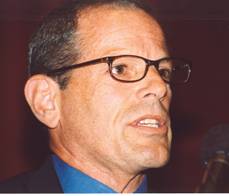
Michael Cohen: First of all I think that gives you an indication of why I was able to get admitted in Massachusetts. It was probably the only state in the union where I could have (been admitted) at that time. In all seriousness, I am not going to go into a law student story because you have heard those, but I will tell you that by the time and I went to school at Suffolk Law School in Boston, I went to the evening division, by the time I entered law school I had been addicted to street narcotics for 10 years -- more than that, 13 years; by the time I finished I had been addicted for about 16 or 17 years. But the questions on the Massachusetts application at that time were basically “have you ever been convicted of a felony?” and I was able to answer honestly no; and “can you get two members of the Massachusetts Bar to affirm your good character?” and because I had done a good job of hiding my problem, I was able to answer that question honestly yes.
I passed the Bar exam and I was admitted, and about six years later -- I wasn't represented by Mr. Muldoon, but I was one of those individuals who after a front page headline regarding my arrest in the Boston Globe -- did appear in front of the Board of Bar Examiners. Now, you can contrast that with -- by the way, the reason I wound up in Florida was not necessarily because of the warm weather, but that's where the drug rehab I went to was, and I decided I liked it down there. I lost my license in Massachusetts for an extensive period of time.
Because I had gotten involved with the Lawyer Assistance Program as part of the rehab program I was in and because I was able to make a showing of recovery to the Board of Bar Examiners, I was reinstated in Massachusetts and decided to apply in Florida. Now, the reason I am the bookend for Mr. Muldoon, is because -- imagine the contrast when I looked at the Florida Bar application, and on the questions regarding character and fitness, by the way the Florida Bar application I think is twenty-three 8 ½ by 14” pages, double-sided. The character and fitness questions, the preamble is “you are required to answer these questions completely, irrespective of any statute, administrative rule, court order or legal or administrative proceeding expunging the information required herein from any record or purporting to authorize any person to deny the existence of such matters, and irrespective of any advice from any source, including legal counsel, that such information need not be disclosed.”
That's quite different from Massachusetts which didn't think it was appropriate to inquire into that information. Again, the reason for this panel is to contrast those and Martha Treese will sort of give you the middle ground that New Jersey has taken, and I am not going to stand up here and try and argue which is best. If Massachusetts had asked those questions on the application, I would have been put in the position of either giving false answers, or acknowledging that there was a problem and, perhaps, finding Bonnie Waters and Lawyers' Concerned for Lawyers before I wound up on the front page of the Boston Globe. I don't know that, you can't answer “what ifs, what ifs, what ifs”, but I will tell you that in my life, and in my four years in the evening division at Suffolk, there was no mention of the problems of substance abuse. If there was, I may have been in a blackout, but I don't remember Lawyers Concerned for Lawyers coming in to Suffolk and doing a presentation. I don't remember the Bar examiners coming in and doing a presentation, I don't remember any of my professors confronting me, although I think it was fairly obvious that there was a problem.
One class, one con law class where we were studying Marbury v. Madison and it was the first class of the evening and I had walked in and promptly fallen asleep at my desk. I think it was fairly obvious when the professor had to call my name four times as far as the discussion of Marbury v. Madison that there might be a problem. I think he was a little surprised because it just so happened at the time I was reading Beveridge's Life of Marshal and when he asked me about it I was able to not only give him the case history, but also the sociological history of everything that was going on in Washington, D.C. in the United States at the time, I was just -- I just rattled back Beveridge.
 But
I'm sure that my professors knew there was a problem, but it wasn't a subject
that was discussed. It wasn't a subject that was inquired into in the Bar
examination. When I got to Florida, I did, obviously was confronted with
the problem, it was something I had to acknowledge on the application. It
is for those of you who don't know or that don't do this as a living or that
don't work with Bar examiners around the country, Florida is considered one
of the most comprehensive, strenuous, shall we say, applications processes
in the country. Everything that I had ever done was inquired into. Because
of the fact the corollary to that is that because of the fact that I was
able to document my recovery and because of the fact that the Bar examiners
through my predecessors in the Lawyer Assistance Program had been educated
about this illness and about recovery and about rehabilitation being possible,
were willing to grant me what is known as conditional admission in Florida
and give me the opportunity to practice while being monitored.
But
I'm sure that my professors knew there was a problem, but it wasn't a subject
that was discussed. It wasn't a subject that was inquired into in the Bar
examination. When I got to Florida, I did, obviously was confronted with
the problem, it was something I had to acknowledge on the application. It
is for those of you who don't know or that don't do this as a living or that
don't work with Bar examiners around the country, Florida is considered one
of the most comprehensive, strenuous, shall we say, applications processes
in the country. Everything that I had ever done was inquired into. Because
of the fact the corollary to that is that because of the fact that I was
able to document my recovery and because of the fact that the Bar examiners
through my predecessors in the Lawyer Assistance Program had been educated
about this illness and about recovery and about rehabilitation being possible,
were willing to grant me what is known as conditional admission in Florida
and give me the opportunity to practice while being monitored.
That's a subject that a couple of people have asked me about already at this conference, I will tell you that the conditional admission process in Florida which is not any conditions on your practice, or the area of your practice, it's a confidential order of the Florida Supreme Court that is done under the applicant's initials. If somebody calls the Florida Bar and asks for the status of that lawyer they are told that they are a member in good standing, the only conditions in a conditional admission are that they participate in the Lawyer Assistance Program, if it's a financial issue, that they have their accounts overseen and audited on a regular basis. If it's a mental health condition, if may be working through our program with a treating psychiatrist or therapist, and as long as they abide by those conditions, they are fully qualified to practice law at the end of whatever term of probation is set by the Board of Bar examiners, they are granted, they are automatically given full admission. It has worked tremendously well in Florida, and as far as I know in the other states that have implemented that.
Florida was one of the first back in 1985, I think there were three states at that time that were doing it. I think there are about 12 states now that are doing conditional admissions as a regular process. So I think that the application process, as far as making those inquiries practically does serve a purpose, but I think the other thing that has been raised here that is critical and will not -- that process won't work unless the issue is addressed is getting the word to the students that they can seek help, that they can get into recovery and then it is not going to act as a bar to their admission.
I was somewhat surprised to hear Butch Childers mention that there are states where that almost is a bar, that almost is the kiss of death. That had not been my experience and that I think is something that needs to be addressed, and I think the Conference of Chief Justices is probably the way to address it. By presenting them with the statistics of how if that problem is addressed correctly, like Laurie said, we can turn out to be credits to this profession.
The way we have done it in Florida, and I need to mention that Associate Dean Gail Sasnet is here from the University of Florida who sits on our Board of Directors, the FLA Board of Directors and you all probably have a mental image when I say the “University of Florida” of Gators or something like that, and that's probably not what the topic of this conference is or at least the goal of this conference is, but I will tell you that Dean Sasnet has made a tremendous effort to change the climate of that law school from what it was 10 or 15 years ago, which is more of what Laurie was describing at Washington and Lee, to a law school where that subject, the subject of abuse, the subject of impairment and the subject of what your requirements are going to be for the Bar examiners really is one of the primary subjects that is discussed.
Not to do one-upmanship with Bob Muldoon, but we now have 11 law schools in Florida, which is just what we need, and 72,000 lawyers. I will tell you that we run the gamut on those 11 law schools. There are some, like the University of Florida, two or three others that are tremendously proactive that put on a panel, usually composed of a representative from the Lawyer Assistance Program, a representative from the Board of Bar Examiners, very often a lawyer who represents applicants in front of the Bar examiners, that is done at every orientation. The thrust of that message is if you are candid on your application, if you are candid about having a problem and you are accurate and document what you have done as far as your rehabilitation and recovery, you will be admitted in Florida. It may be a conditional admission, the process may be rigorous, but we can give you hope that you will be admitted. We can also tell you that if you have had a problem and either not done something about it or are not honest about it on the application, you almost certainly will not be admitted, that is the way we have addressed it.
Can I tell you that students are not put off when they look at that application in their first year and see questions like that? I absolutely cannot tell you that. My hunch is there are a number that are. The only way we have found to address that is to get into the law schools early, and I absolutely agree with whoever said that this has to be a mandatory session. If you do this on a voluntary basis, the only people you are going to get to attend are students that are already in recovery. We have found that, and you will have a very nice AA meeting, but you really won't reach the students that probably need the help. It needs to be a mandatory session, it probably needs to be at orientation, there is a tremendous amount of overload at orientation, but even if you can get the students the brochure for the Lawyer Assistance Program, even if you can get them the 800 help line number, if they just tuck it away somewhere and realize that there is a resource that they can call on sometime in the future when they start getting a foundation, that's enough.
But there has to be some contact, there has to be some acknowledgment that the problem exists, and hopefully in your state you can say that if the problem is acknowledged and the student is willing to get help, that they don't need to fear the Board of Bar Examiners. Those are the approaches that we have taken, we think we have been very successful in Florida; we have a very good working relationship with the Board of Bar Examiners, as evidenced by the fact that I am here. Actually, my slot on this panel was supposed to be filled by Catherine Russell, who until recently was, the Executive Director of the Florida Board of Bar Examiners in Florida. She decided that getting married was more important than that and actually resigned, left her position after I think years with the Board in April, but called me and asked if I would take this slot on the panel. That's the relationship that we have with the Board of Bar Examiners in Florida.
So I think that maybe that has given you some ideas that perhaps the application does need to make those inquiries. The corollary is that, if they are going to, somebody from the Lawyers Assistance Program needs to have a relationship with the law schools so that they can go in and reassure the law students that if they answer those questions honestly, it is not going to act as a bar to their admission, and I think the overall goal that we try and establish is to develop that relationship, the two-pronged relationship with the law school and with the Bar Examiners so that the applicants, the students, know that there is a resource in the state where they can ask questions confidentially, where they can go for help confidentially if they want it, until they say that we can release it and that if they are willing to seek that help and follow the suggestions, the chances are real good that they will be admitted and they can become productive, responsible members of their state Bar. And for the middle position, I guess, I would say, let me turn it over to Martha Treese and then we will open it up for questions. Thank you.
Martha Treese: The interesting part is we are not the middle position. I can pretty much stand here and say everything that Michael has already said. New Jersey has the third largest number of applicants per year. Only California and New York have greater number of applicants than we do; this little tiny state that is tucked in the middle between Pennsylvania and New York. New Jersey has one other thing that most states don't have, and that is permanent disbarment. Since it became very clear that a lot of the problems that are caused or that caused disbarment have an alcohol or substance abuse background, it became clear that we must, as a Committee on Character, look at preventive measures before people entered the Bar, not worry about or not have them worry about being permanently disbarred after they have established a practice.
 We
have a 47-member Committee on Character, all volunteer attorneys throughout
the state appointed by the court. So the first thing we had to do was educate
all of our committee members as to what alcohol and substance abuse problems
were. This was not a character defect, we have one group that says, “Oh,
this is a character defect” and they should all be not admitted. And then
we have another group that says “okay, boys will be boys, you know, this
is just going out and having a few beers.”
We
have a 47-member Committee on Character, all volunteer attorneys throughout
the state appointed by the court. So the first thing we had to do was educate
all of our committee members as to what alcohol and substance abuse problems
were. This was not a character defect, we have one group that says, “Oh,
this is a character defect” and they should all be not admitted. And then
we have another group that says “okay, boys will be boys, you know, this
is just going out and having a few beers.”
Somehow we had to get everybody on the same wave-length as to what we were actually talking about and what alcoholism and substance abuse was, and we could thank NJ LAP and Bill Kane for a lot of very good educational information. The second thing that we felt we had to do was get into the law schools; New Jersey has three law schools. I have to say that we go in every single orientation and basically tell students several things, one is you have to disclose everything and we, like Florida, have a very comprehensive application. And, like Florida, we don't take the applicant's word for everything--we verify everything. We do credit reports, we do fingerprint checks, we do drivers license abstracts, if anybody has ever seen, a New Jersey drivers license has more information on it than you would ever want to know. We require that they give us all arrest reports, we require that they give us all civil proceedings, we require -- what we are looking for are red flags. Yes, we ask the questions “have you ever been in a mental hospital with certain diagnoses within the last 12 months”? We also ask “do you have a problem with substance abuse” but we don't really expect those to be where we get the answers from. The only people that generally answer that are already the people in recovery and we are not terribly worried about them.
So we do want to get into the law schools the first year in orientation and say “this is the first day of your legal career, do not get arrested while you are in law school, do not have plagiarism while you are in law school, and if you have a substance abuse problem, or if you think you are drinking more than the person sitting next to you, or you can answer some of the questions raised on the questionnaire as to what might be the flags for abuse, get treatment now, because if you start treatment your first year in law school, you are going to have no problem with getting through the committee on character, because you already have established the process of recovery.”
We do not do it at the same time LAP does, but LAP follows us in, a few months after we go there, which reinforces what we have already told them, although we do give LAP's number at the time that we talk to the students. Bill (Kane) tells me that after one orientation we got a call from a young woman who said somebody just came in front of us and said “if you're smoking marijuana, stop it” and gave them the LAP number, and the person called Bill and said “OK, what do I do now?”
We then had to build cooperation with LAP, and we do that in two ways. One is we try to get people there as law students, but the second is LAP also evaluates applicants for us when we have a hearing set up that we think we have a problem as attorneys we don't want to say you have a problem. It's not our bailiwick, we don't know that, but we do send people to LAP for an evaluation. They do one of two things, one is they say this is not a chemical dependency problem, but we want them to have an educational program because they are abusing alcohol, they are possibly abusing drugs, we want them to go through an educational program so that they at least understand what they are doing and what the resources are if they need them later on in their careers. The second thing then is if somebody does have a chemical dependency, LAP let's us know. If they are in recovery we, too, have a conditional admit program and we have had admission with conditions for maybe not quite as long as Florida, but certainly a very long time. And our conditional admit is that you are fully admitted with a court order of conditions that you must remain abstinent, that you must attend so many meetings of AA, or so many meetings of Lawyers Concerned for Lawyers, or you must have therapy, whatever the conditions may be appropriate for the individual that is in front of the committee. Because it is a court order, and these are all confidential, nobody knows it, and if someone would call the Bar and say “is so-and-so a member of the Bar?” “Yes, he is a member of the Bar in good standing.”
There is no stamp on your license, there is nothing that would say that there is a problem with your admission, because there isn't, however if the conditions are broken, it becomes a disciplinary problem and can be brought in front of the court for appropriate discipline. We have done this for a very long time, and we have had one person in front of the court who -- I have to step back, the conditions do not expire automatically, you have to petition the court to have the conditions expire, which means that if, indeed, there is a relapse, the condition may be extended for a while, if that's all there is, somebody relapses, this is a part of alcoholism, the condition can be extended.
We had one person who never relapsed and never had a problem and wasn't breaking the condition but stopped doing a certification that they were and did not petition the court to get rid of the condition, so we brought it as a disciplinary matter in front of the court, and the person managed to get all of her paperwork in, and ultimately the court allowed the conditions to be terminated. But we fined her for not doing what she should have done all along, and one other person who is currently before the court because -- not so much because they relapsed, but because they lied on their certifications to us that they had relapsed.
It works: we have about 25 to 35 people per year on conditions, and as I said, in the 10 years, 12 years I guess that I have been there, I think we have only had the two cases that went to the court. I think it's important that students recognize and that we tell them, and tell them, and tell them and that the law schools really believe this, is that we are only concerned with unaddressed substance abuse problems. We like people who have addressed their problems and are in recovery and have taken the steps to handle whatever the issues are that have led to the alcohol or substance abuse programs.
I guess one of the other things that I would say is that everyone worries a little bit about intrusion into people's personal lives, and I think it was quite early on for me, anyway, in doing this when I realized that we had a young man who appeared in front of us who had an arrest. There was nothing really else in his background, but he had an arrest for cocaine, and when he appeared before the panel, which was a very sophisticated panel, they said there are more problems here than just this. His wife at the time appeared and said that he would never do it again because she would force him, and he promised her that there was no abuse and this was just an aberration. The panel was not convinced and said, “no, we think that you have a substance abuse problem that you are not addressing and we are not going to recommend your admission.” He then appealed it and between the time of the original report and the appeal he did seek treatment and discovered, gee whiz, he didn't only have a cocaine problem, but he also had an alcohol problem. But the second panel also said, “ Yeah, okay, we are glad that you are addressing this, but we don't think that you are in recovery.” He was denied. He came back about a year and a half later before the same panel. This time he had his therapist with him and his sponsor, and his wife, and everybody agreed that he was in recovery. But I think the most telling thing for all of us who sat there was his wife, who said to us, “I cannot believe the difference. I cannot believe how much better our life is, how much we have as family improved and I did not realize the extent of the problem. And thank you very much.”
I don't know, it's not only that; it's we need to help the profession and we need to recognize these problems and get them addressed, but I think in so doing we often help the individual, too. Thank you.
Michael Cohen: OK, we do have about five or ten minutes for questions, yes.
Audience Member: Good afternoon, I represent one of the nine law schools in Massachusetts that Bob referred to . . . I want to make a statement then I have a question. Both you and Bob talked about the proliferation of law schools and law students in your respective jurisdictions, I just think it's important to note that in terms of working for the poor people of those states, they are still under represented; that's my soap box. In terms of the question, the Florida approach strikes me as kind of peculiar, you give a person conditional admission because they have indicated that they have a particular condition. Generally speaking the condition is not one that is likely to end, an ongoing struggle, yet their conditional admission or that status is subsequently terminated. I don't get that. I think the New Jersey approach makes more sense.
Michael Cohen: The observation is that contrasting the Florida condition of admission with the New Jersey where you have to petition to conclude the conditional admission, as opposed to Florida where it's a term certain as long as you abide by the conditions, I assume it works in both jurisdictions; it seems to work with us. We usually provide the recommendation as to how long that probationary period should be, and that's based on our assessment of how long they have been in recovery, whether they are in recovery, and you are right, I just don't think the Florida Supreme Court wants to add yet another procedure to what is already a very long term comprehensive admissions procedure. I think once the Bar Examiners are done with it, they want to be done with it at that point. But I can't say which works better, they both seem to work. Anyone else?
Martha Treese: I just want to make one comment, and that is because of where New Jersey is, if there are any New York Law schools out there who would like anybody from New Jersey to come and talk to their student bodies, we would be most happy to do so. We do get -- half of our applicants come from either Pennsylvania or New York, and although, Mark Dows who is here from Pennsylvania does speak to the Pennsylvania schools, I am not sure what the -- what the group in New York does, if there is any interest we certainly would be willing to do so.
Michael Cohen: Thank you all.
James Moore: Thank you to that panel.
Biographical Information
Michael Cohen
Executive Director, Florida Lawyers Assistance
B.A., Boston University; J.D., Suffolk University Law School
Michael Cohen is Executive Director of Florida Lawyers Assistance, Inc., a non-profit corporation independent of, but funded in part by, the Florida Bar in response to the Florida Supreme Court’s mandate that the Bar create or fund a program to identify and offer assistance to its members. FLA’s primary purpose is to assist the impaired attorney in his or her recovery. Cohen is a frequent lecturer and author of numerous publications on issues related to attorney impairment. He is a member of the Florida and Massachusetts Bars and the American Bar Association. He served on the ABA Commission on Lawyer Assistance Programs (1997-2001) and currently sits on CoLAP’s Advisory Forum. He is a Certified Employee Assistance Professional, a member of the National Association of Alcoholism and Drug Abuse Counselors, and the Florida Alcohol and Drug Abuse Association, Inc.
Robert J. Muldoon, Jr.
Sherin and Lodgen LLP
A.B., Boston College; LLB, Boston College School of Law
Robert Muldoon has been a Member of the Massachusetts Board of Bar Examiners since 1974. He is a Fellow of the American College of Trial Lawyers; a Member of the American Law Institute; former Chair of the National Conference of Bar Examiners; and a former President of Massachusetts Continuing Legal Education.
Muldoon has specialized in complex business, professional liability and real estate litigation since 1967. In addition, he has represented numerous medical service providers in injunctive and infringement proceedings. His complex business and securities practice includes representation of many national and international corporations, particularly in areas of anti-trust, securities regulation and land use. His professional liability practice includes the representation of major law firms involved in malpractice litigation. In that connection, he has served on several continuing legal education panels concerning loss prevention and risk management.
Martha K. Treese
New Jersey Board of Bar Examiners
B.A., Wilson College; J.D., University of Pennsylvania Law School
Martha K. Treese has served as staff counsel to the New Jersey Supreme Court’s Committee on Character since 1990. The Committee on Character, consisting of forty-nine practicing attorneys appointed by the Court, reviews each applicant for character and fitness to be admitted to practice. Previously, Treese served in private general practice, as an Assistant Public Defender with the Philadelphia Public Defender’s Office and for Community Legal Services in Philadelphia. Treese has written and participated in programs concerning juvenile rights and character and fitness issues.