Breakout Sessions
MEETING OUR RESPONSIBILITIES: SUBSTANCE ABUSE AND LAW SCHOOLS
June 24, 2003
BREAKOUT SESSIONS: DEANS ONLY; CHARACTER & FITNESS;
STUDENT SERVICES; FACULTY MEMBERS
The following summaries were provided by the facilitators of the breakout sessions. No sound or video recordings were made of the breakout sessions.
Hannah Arterian: “Deans Only” Breakout Session Facilitator
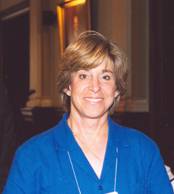
I learned so much during the day and was inspired to try new
things pretty quickly back at Syracuse (Law School).
It was disappointing that more deans did not attend, especially
in light of the otherwise excellent turnout. In my view,
without a fuller dialogue between the bar and the deans on this
issue, we are going to be treading water on the major
undertakings regarding faculty issues, which was the main topic
of conversation
in my breakout session.
The fact that there were two deans and one associate dean for faculty in the room allowed more interaction with John Clark and Butch Childers of CoLAP. As a result, it was even more evident that we need a small session with a few practitioner members of the CoLAP committee and a few deans to talk about issues regarding faculty.
It was evident that we all had the same goal, but there wasn’t a common ground of understanding of the relative difficulty of a dean to take action when faced with an abusing faculty member and also a need to understand that while a Lawyers Assistance person could help a faculty member, the confidentiality context will not assist the dean faced with a faculty member with a drug, alcohol or emotional problems. And in general with faculty, we need to focus more attention on the mental illness issues too.
I think we agreed that we needed a vehicle to allow this conversation to occur more fully, more rigorously, and to take the time to create a good structure for it. We need, with Butch’s lead, to get a group of the leaders of CoLAP and a group of deans to commit to sit down and talk through the issues. I think having a short two-page paper in which the academic context is spelled out regarding faculty matters like this would be very helpful in advance of such a meeting. In addition, supplying some scenarios from deans – believe me we can get them – would focus discussion. We don’t need lots of people for this, but we should invite a representative selection of people from state schools, private schools and free standing law schools, so that we get a cross section of structural obstacles to good outcomes.
Regarding the discussion of the story from the Chronicle of Higher Education, which cited increasing numbers of students coming to law school who are seeking help for emotional disorders at a much higher rate than in the past, I offer this comment. If we believe that alcohol and substance abuse sometimes are instruments of self-medication which lawyers and law students turn to in order to fix their emotional problems, or if we think that some alcohol and substance abuse in the profession is a reflection of inability to maintain enough self-sense to avoid overuse of these things, then it is clear to me that it is very good news that college students are seeking help without coercion. This is a phenomenon that can use more study at least. I was discouraged that a negative spin was placed by some participants on those seeking help, which we want to encourage.
I was also put off by the “no alcohol” approach that came through a few times. The reality is that our students will go out into a world, not just a legal world, in which some people drink socially. Some programs are working on just lowering the amount people think that their peers are drinking. At least at the undergraduate level, there are studies showing that students vastly overestimate what others drink and feel they need to drink to that level. Seems to me that can be extrapolated to law schools too, and to the profession. So one approach, which wasn’t discussed, was trying to peel away the notion of how much people drink so that the picture is more realistic and students don’t think they need to drink so much.
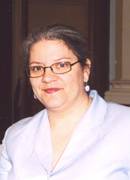 Aviva Orenstein: “Faculty Members” Breakout
Session Facilitator
Aviva Orenstein: “Faculty Members” Breakout
Session Facilitator
The session for faculty members went very well, but needed more time. We had a very interesting and diverse group of law professors, deans, practitioners and law people who attended, and we spent time on introductions, each of us discussing our interest in the subject. I began my presentation with why I thought it was essential to have addictions and depression as part of the curriculum, discussing some anecdotes of student reactions to presentations on substance abuse and depression, including a couple of cases where lives were transformed when they heard about LAP and the fact that the profession would not shun them for getting help. Besides helping to identify and assist students, we also talked about the benefits for helping other lawyers, avoiding misconduct and malpractice, and spotting addiction/depression in clients. Then, we discussed various areas in the curriculum where addictions and depression could be integrated into the curriculum, including personal examples from clinics, evidence class and civil procedure.
Most of the time was spent discussing how a course on professional responsibility should address these issues. For this part of the presentation, I followed the materials in the outline and we walked the group through how I do it, inviting someone from LAP who also brings along someone from attorney discipline and a recovering alcoholic who is an attorney. I emphasized the power of having someone who was an alcoholic speak to the students. Also, I shared my experience that breaking up the students into small groups is vital to getting them to talk about such issues, and provided an example of a question sheet for each group.
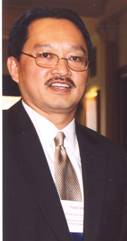 Frank Shih: “Student Services” Breakout
Session Facilitator
Frank Shih: “Student Services” Breakout
Session Facilitator
In substance abuse counseling, dissimilar cultural beliefs and philosophies as well as conflicting attitudes regarding alcohol and its role in social life may produce unspoken misunderstandings between counselors and clients. This session provided an opportunity for participants to share and discuss areas of possible cultural conflict with the goal of identifying issues that impact relationships between counselors and students who are from different backgrounds.
Three case studies were presented to facilitate conversation. The cases involved a young Korean male, a 36 year-old Puerto Rican single mother and a 24 year-old African American male.
In the discussion, the group immediately identified misconceptions that may be associated with age, gender and class differences. We talked about the sources of communication barriers such as the lack of cultural expressions for psychological and affective conditions as well as English proficiency. One participant commented about privacy as a cultural issue and the connection between the individual to his/her family, which can influence the degree of shame as well as guilt associated with revealing personal issues to outsiders. The family can be either a network of support or a source of anxiety or stress. The strength of family ties and extent of close family members vary with culture. This may have a bearing on emotional responses to loneliness and depression. Additionally, ethnic gender roles could produce varying expectations from family members.
The group observed that racial and ethnic origins belie the varying levels of acculturation and identification with the mainstream culture. For example, we reviewed the different connotations in the case of the Puerto Rican, which can either indicate a strong identification with the traditions of the island or simply a matter of ethnic pride. Because this same individual labeled herself as a “devout Catholic,” the role of religion on social roles and worldviews was introduced as a potential area where misconception can occur. We observed that the role of self-esteem and the degree of social comfort in interactions between students and authority figures varies within many ethnic and racial categories as well.
Finally, culturally based expectations of the counseling experience must also be acknowledged. Though the prevailing counseling model favors self-actualization and the expression of affect, some students with different world views will not share the counselor’s definition of “self” and may prefer a structured and problem solving approach to counseling. Moreover, understanding race relations in the US may facilitate the counseling experience between white counselors and students of color.
The session concluded by acknowledging the need to be “culturally neutral” in all interactions.
Examples discussed:
1. Peter immigrated to the US from Korea with his parents and three younger siblings when he was 14. He graduated from a large university in California and was employed in his father’s business for 2 years before entering law school in the East Coast. During the spring semester of the first year, Peter became the topic of a hallway conversation between two white female professors. They were chatting about “a student” who had a sudden decline in academic performance. A professor also thought she smelled alcohol on his breath when talking to him before classes in the morning. One of them approached Peter on a casual basis, inquiring about his general well being. He was very uncharacteristically quiet but talked about an argument he had with his girlfriend that disrupted his study routine. The professor then suggests that he makes an appointment with the school counselor. Pete said that he’s seen them before but they are “useless…they only want you to talk.” When asked about alcohol, he said that he drinks only to calm his nerves and for heart palpitations for which he’s seeking a diagnosis from a doctor.
2. Maria is 34 years-old and identifies herself as a proud Puerto Rican and a devout Catholic. She attends law school in New York City and volunteers in the clinic as a translator. Maria is doing passing work in her classes but has been recently cited for tardiness in morning classes. Several students had gone to Mike, the Dean of Students to report that they suspect Maria takes “pills.” The students were concerned that she was ignoring the needs of her small children. Mike speaks to Maria and finds her to be quiet and non-responsive during the meeting. She says that her mother watches her children but never talks about other members of her family. Maria also said that her mother takes care of the children after school but complains that Maria should be home with her children. Though he repeated several times that the conversation was confidential, Maria still asked if he will tell her professors. She denies that she has a substance abuse problem saying that she takes painkillers for a car accident injury she was involved in two years ago.
- Tom is a 24 year-old African American male who graduated from a large historically Black institution. He attends law school in a rural area and is known as someone who studies alone. Tom was among a group of students participating in a drinking game during a school party when they were reported as being disruptive and were visibly intoxicated. A fellow student asked them to stop and reported the incident to the Dean of Students. Tom was approached by Nancy, the Dean of Students. Nancy found Tom to be belligerent and particularly angered by the implication that he might have a “drinking problem.” She also learned that his friend’s mother had been hospitalized which has caused some worries.
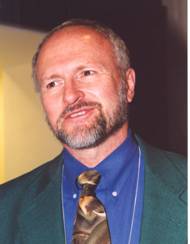 Robert Davis: “Character & Fitness” Breakout Session
Facilitator
Robert Davis: “Character & Fitness” Breakout Session
Facilitator
The assignment of my breakout session was to focus on the availability of advisory opinions pre-application or even pre-law school admission. The limited cross-section of attendees (mostly from New York, Florida, Massachusetts, New Jersey, Pennsylvania) knew of no situation in which law examiners could provide any sort of formal advisory opinion to potential law school attendees. However, Mark Dows of Pennsylvania indicated that he gives informal non-binding advice to applicants, particularly to the potential “close” cases.
New York indicated that their examiners do not give advice but that their court has a petition and advice rule which allows any bar applicant to petition the court and get a court order stating whether their particular character issue will allow admission to the bar. I asked Mark Dows if another jurisdiction also had any type of pre-law school admission or pre-application provisions for review of potential problems. He recalled that New Jersey had an advisory group of official stats, which can give help to applicants at an early stage, but their procedure seemed less formalized and official than that discussed by the attendees from New York. Massachusetts also indicated they speak with applicants informally, as did Florida, but that it is strictly informal. Massachusetts is very careful about such opinions; Florida and PA have a bit more leeway in that area.
Florida reported that they have conditional admission; Pennsylvania is working on such a rule, which is not yet in place. Florida has no set limit on the conditions, they can be extended, as needed and ends only upon petition to terminate the suspension. Other states have adopted a strict time certain on the conditional admission, which seems to me to be a little less flexible than might be desirable.
I appreciated the conference - it energized me to go back to my law school and fellow Professional Responsibility professors to attempt to install a more consistent and effective approach to the alcohol-drug abuse problem of law students.
Biographical Information
Hannah R. Arterian
Dean and Professor of Law, Syracuse University College of Law
B.S., Elmira College, magna cum laude, Phi Beta Kappa; J.D. with high distinction, University of Iowa
Before becoming Dean at Syracuse Law School, Dean Arterian taught at Arizona State, the University of Houston and the University of Iowa Law Schools. She served as associate dean at Arizona State for ten years. Arterian has written in the area of Title VII, particularly the dilemma of the employment of women in fetally toxic work environments. Previously, Arterian was associated with the New York law firm of Dewey, Ballantine, Bushby, Palmer & Wood where she practiced corporate tax law. Arterian was note and comment editor of the Iowa Law Review and a member of the Order of the Coif.
Robert H. Davis, Jr.
Adjunct Professor, Widener University School of Law
Robert Davis is an Adjunct Professor at Widener University School of Law, where he teaches the basic Professional Responsibility course and a course in advanced professional ethics problems. Professor Davis is in the solo practice of law in Harrisburg, Pennsylvania, specializing in representation of lawyer respondents, judicial officers, nurses and other professionals, government officials and employees and others in Pennsylvania and West Virginia before professional and judicial discipline boards and the State Ethics Commission. In his practice he also issues advisory opinions to lawyers and law firms on questions relating to ethics, malpractice avoidance and the law of lawyering, and he occasionally appears as an expert witness on lawyer responsibility and ethics. He was elected a Master, James Bowman Inn of Court, Harrisburg in 2001. Davis served as Deputy Chief and Acting Chief Counsel of the Disciplinary Board of the Supreme Court of Pennsylvania until August of 1992. Davis was the original author and the head of committees that created intervention programs for the State Bar of Georgia and the West Virginia State Bar. He served as General Counsel to the West Virginia State Bar, which bar awarded him its highest award, the Award of Merit, for his service there, and served as the first Assistant General Counsel of the State Bar of Georgia. The National Organization of Bar Counsel elected him its President in 1983-1984. In May of 2002 he received his second Distinguished Service Award from the Pennsylvania Bar Association.
Aviva Orenstein
Visiting Professor, Benjamin N. Cardozo Law School of Yeshiva University
A.B., summa cum laude, Cornell University; J.D., magna cum laude, Cornell Law School
Aviva Orenstein is currently a Visiting Professor at Cardozo School of Law, where she teaches Civil Procedure, Evidence, and Professional Responsibility. Her home base is Indiana University School of Law where she recently served as co-director of the Child Advocacy Clinic. Formerly, she directed the Legal Research and Writing program at Rutgers Law School in Camden. Orenstein occasionally serves as a consultant on legal writing, and has worked with an Indiana citizens’ group on reforming the jury system. Orenstein regularly delivers Continuing Legal Education classes on evidence, ethics, and legal writing. She also writes plays for the law school and local bar on issues of legal ethics, civility, and gender discrimination. Orenstein served as articles editor of the Cornell Law Review, and she clerked for the Honorable Edward R. Becker, Chief Judge for the Court of Appeals for the Third Circuit.
Frank H. Shih
Assistant Dean of Students, City University of New York Law School at Queens College
M.A., Ph.D., New School for Social Research
Frank H. Shih is responsible for the offices of Career Planning and Student Affairs at CUNY School of Law. His wide experience in higher education includes academic advising, admissions, student organizations, program development and enrollment and retention management. Before coming to CUNY he served as the Director of the Center for Academic Advising and coordinated New Student Orientation and Peer Advising at the State University of New York at Stony Brook, where he received the 1992 SUNY Chancellor's Award for Excellence in Professional Service. A former social worker and community advocate in New York City, Dr. Shih has interests in multiculturalism and pluralism, and has written about the experiences of Asian and Asian American students. He is currently Vice President of the Board of Directors for Literacy Volunteers of America-Suffolk County. He is also a member of the Board of Directors for Long Island United Way and on the Advisory Council for Nassau Suffolk Law Services of Long Island.